View as PDF
American National Standard for Architectural Door Trim
This Standard contains requirements for door protection plates, door & wall edgings, push plates, door pulls, push & pull bars, and vertical rod covers & guards. Included are strength, dimensional, and material criteria plus environmental performance. For further information, consult the full standard, ANSI/BHMA A156.6 Architectural Door Trim.
For further information, consult the full standard, ANSI/BHMA A156.6 for Standard for Architectural Door Trim.
BHMA has created this series of Hardware Highlights to provide useful, accessible information about builders hardware for anyone with an interest in devices that hang, control, secure, and trim the doors. BHMA is the trade association which represents almost all of the North American manufacturers of builders hardware. One of its main activities since 1983 has been the development and maintenance of ANSI-approved standards for many separate product categories.
Product Performance: Purchasers of door controls certified to A156.6 (http://buildershardware.com/cpd) can be assured products will perform to their expectations.
Below is an explanation and some examples of the evaluations conducted for certification:
|
Product Categories
|
Performance Tests
|
Option Designations
|
|
Architectural door trim is available in a wide range of sizes and designs. Each product type is clearly categorized within the Standard to ensure consistency in performance and application. For each category, the Standard defines requirements for materials, construction tolerances, and attachment methods.
|
The Standard includes defined test methods to evaluate the durability and structural integrity of architectural trim. One example is a tension test for push/pull-type trim, which must withstand a load of 200 lbf (890 N) applied for 60 seconds at the midpoint between the outermost fasteners, without breakage of the unit or its fasteners
|
Complementing product categorization are option designations. These are expressed as symbols that identify optional features and configurations which may be specified for door protection plates, push plates, pulls, bars, and related trim. For example, the symbol “MID-X” indicates the use of a middle post, where X represents the total number of posts.
|
Building Codes - Builders hardware provides several attributes that are essential to building safety and performance, including egress and fire protection.
Accessibility - There are various types of trim which meet the ADA and A117.1 requirements.
Sustainability - Door trim contributes to building sustainability through their verified durability, as well as material characteristics such as recycled content and recyclability. The reliable closing and sealing of openings can also contribute to energy conservation. BHMA has developed Product Category Rules, which will further define sustainability requirements and guide life cycle assessments and environmental performance declarations.
Type Numbers: Another significant contribution of standards for product specification is a numbering system for product types. Please consult A156.6 for the full list; an example is provided here.
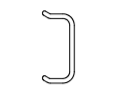
Offset J402
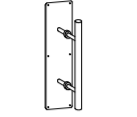
Set Option J406
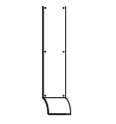
Push-Pull Plate J303